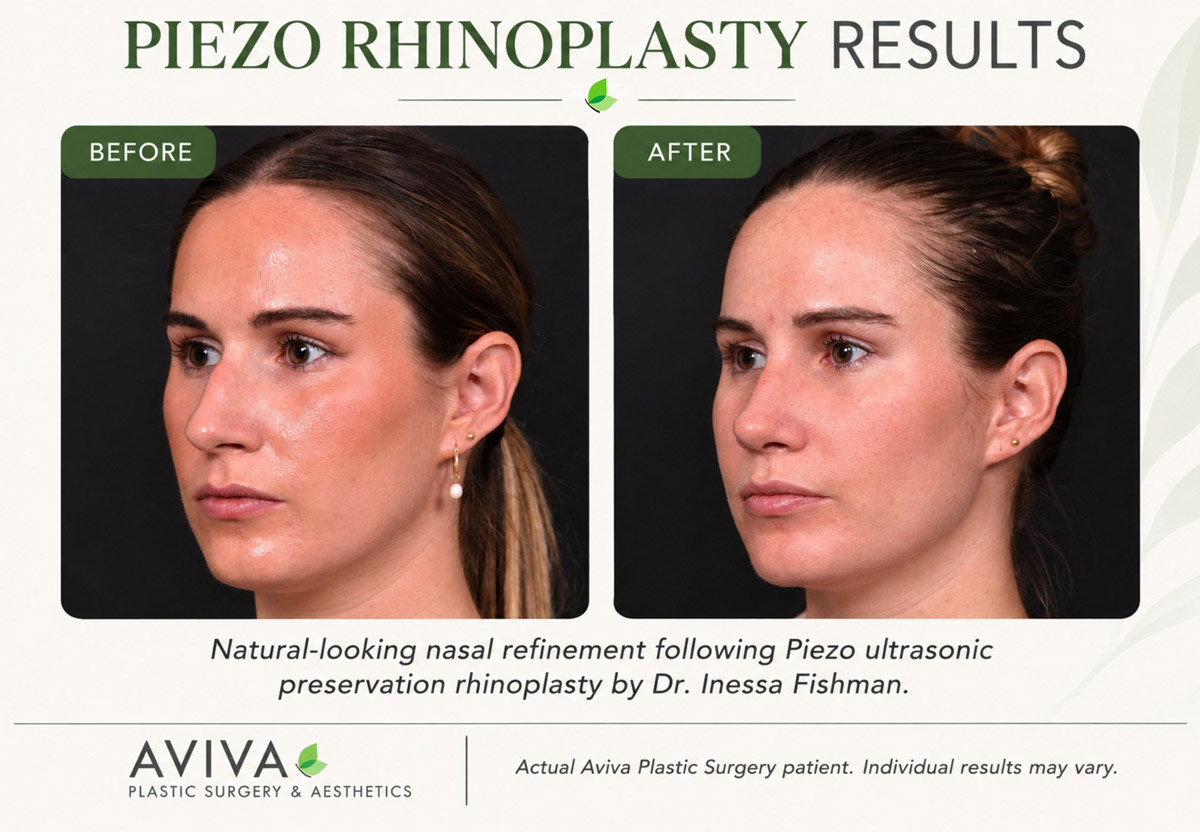
If you've been researching rhinoplasty in Atlanta, you may have come across the terms ultrasonic rhinoplasty o piezo rhinoplasty and wondered what they actually mean.
At Aviva Plastic Surgery & Aesthetics, I use piezo, or ultrasonic, technology as part of many rhinoplasty procedures. It gives me a highly controlled way to reshape nasal bone while limiting unnecessary trauma to the surrounding tissues. For patients, that precision can also mean a more comfortable early recovery with less bruising and swelling.
Piezo technology allows me to reshape bone precisely while protecting the delicate soft tissues around it.
What Is Ultrasonic Rhinoplasty?
Ultrasonic rhinoplasty, often called piezo rhinoplasty, uses a specialized instrument that produces high-frequency ultrasonic vibrations to reshape the nasal bones.
Traditional rhinoplasty instruments such as chisels, rasps, and osteotomes rely on manual force to cut or file bone. Piezo technology works differently. The device is designed to act selectively on bone, allowing me to make very precise adjustments while helping preserve nearby soft tissue, cartilage, and blood vessels.
Piezo rhinoplasty is not a separate type of nose surgery. It is one of the tools I may use during rhinoplasty when it gives me better control for a patient's anatomy and surgical goals.
How Piezo Technology Works During Rhinoplasty
During a piezo rhinoplasty, I use the ultrasonic instrument to make controlled adjustments to the bony structure of the nose. Depending on the patient, that may mean narrowing a wide bridge, smoothing a dorsal hump, or carefully refining bone during a revision procedure.
Because the ultrasonic vibrations target bone specifically, the technique offers a level of control that can be difficult to achieve with traditional instruments alone.
Piezo technology can be particularly useful for:
For some patients, I may combine piezo technology with other approaches, including preservation rhinoplasty or structural cartilage techniques. The surgical plan is always based on the patient's anatomy rather than on a single technique.
Why Patients Often Experience Less Bruising and Swelling
Much of the bruising and swelling after traditional nasal bone reshaping comes from trauma to the soft tissues and small blood vessels surrounding the bone. Because ultrasonic rhinoplasty allows for more targeted bone work, there may be less disruption to those surrounding tissues.
For many patients, that can translate to:
- Less bruising in the days following surgery
- Reduced swelling, particularly around the eyes and nasal bridge
- A more comfortable early recovery
- An easier return to work and social activities as initial swelling improves
Every patient heals differently, and no technology can eliminate swelling after rhinoplasty. Still, reduced soft-tissue trauma is one reason I incorporate piezo technology into primary and revision rhinoplasty when it is appropriate.
What Recovery After Piezo Rhinoplasty Looks Like
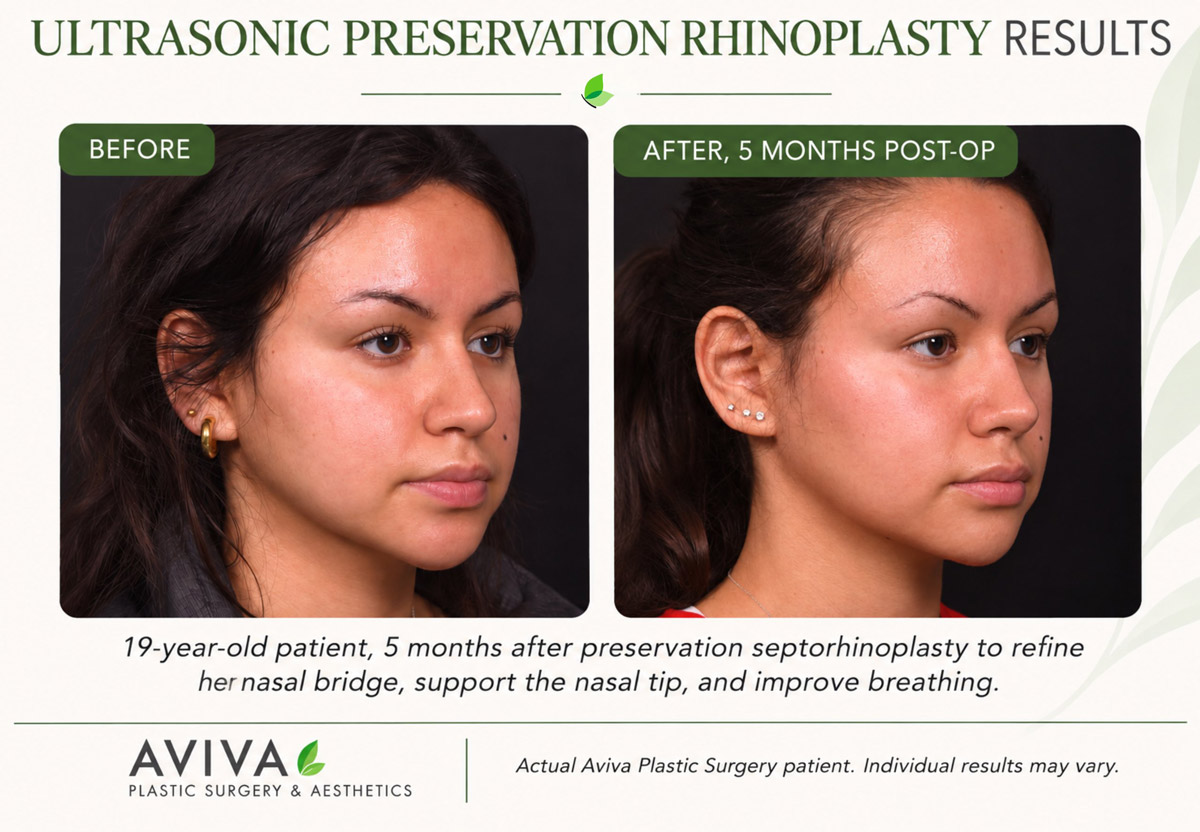
Recovery after rhinoplasty with ultrasonic technology follows the same general healing process as other rhinoplasty techniques. The difference many patients notice is that the early bruising and swelling can feel lighter because there has been less trauma to the surrounding soft tissue.
Your nasal splint remains in place, and swelling and bruising are usually most noticeable during this stage. Many patients have relatively limited bruising around the eyes. Rest, sleeping with your head elevated, and avoiding strenuous activity are important.
The splint is typically removed around this time, giving you the first look at your new nasal shape. Bruising has largely faded for many patients, and swelling continues to decrease. Many people feel comfortable returning to non-strenuous work and social activities toward the end of this period.
Swelling continues to settle and the nose begins to look more refined. Light exercise can often resume once I have cleared you to do so. Some residual swelling, especially at the nasal tip, is completely normal.
Most visible swelling has resolved, and the nose looks much closer to its final shape in most areas. Any temporary changes in sensation should continue to improve.
Subtle refinement continues as deeper swelling resolves, particularly at the nasal tip. Final results are typically visible around 9 to 12 months, although most of the visible change appears much earlier.
Your healing timeline depends on your anatomy, the extent of surgery, whether this is your first rhinoplasty or a revision, and how your tissues respond. Your follow-up visits allow us to monitor healing and guide you safely back to normal activity.
Is Ultrasonic Rhinoplasty Right for You?
Piezo rhinoplasty is not automatically the best approach for every nose. It is a refined surgical tool that I may incorporate when it supports the safest and most precise plan for your anatomy.
Whether ultrasonic technology makes sense for your rinoplastia depends on your goals, your nasal structure, whether you have had previous nasal surgery, and what needs to be changed to create a balanced result that still looks like you.
If you are considering rhinoplasty in Atlanta, your consultation is where we can look closely at your anatomy, discuss what you would like to change, and decide which techniques make the most sense for you.
Preguntas Frecuentes
Precision matters in rhinoplasty.
Schedule a Rhinoplasty Consultation in Atlanta
If you're considering rhinoplasty or revision rhinoplasty and want to know whether piezo technology may be part of your surgical plan, schedule a consultation with Dr. Inessa Fishman at Aviva Plastic Surgery & Aesthetics in Atlanta.
This post is for informational purposes only and does not constitute medical advice. Individual results and recovery vary. All surgical decisions are made on an individualized basis following a thorough consultation with Dr. Fishman.
 English