
A full area under the chin is not always caused by fat or loose skin.
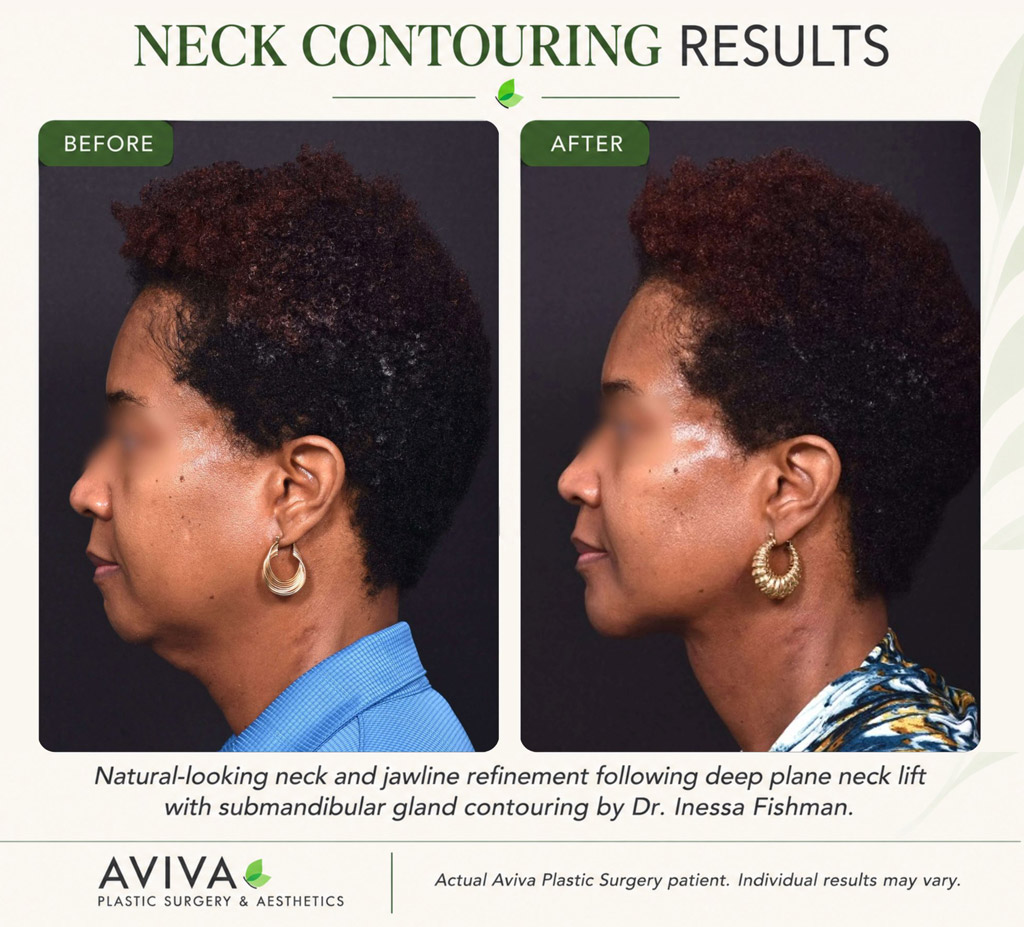
Sometimes, the shape of the neck is affected by the submandibular glands, two glands that make saliva and sit beneath the lower jaw. If they are enlarged or sit lower than usual, they can create a bulge under the chin or along the jawline.
This can happen in younger patients as well as more mature patients.
A smoother neck starts with treating what is actually causing the fullness.
Why the Gland Matters in Neck Surgery
During a neck surgery consultation, I look at what is causing the fullness.
That matters because removing fat or tightening skin may not fully address a gland that sits too low. When a gland is part of the concern, I may recommend reducing its size as part of the neck surgery plan.
Gland reduction is not needed for every neck surgery. The decision depends on each patient's anatomy and goals. If a prominent gland is left unaddressed, it may remain visible as a bulge even after other parts of the neck have been treated.
What Does Gland Reduction Involve?
I do not remove the entire submandibular gland.
Instead, I carefully trim the portion that extends below the border of the lower jaw. The goal is to improve the contour beneath the jaw while leaving the rest of the gland in place.
When a prominent gland is not addressed, some patients later seek a revision to correct it. That is why I look at the glands from the very first consultation.
How We Plan for Safety
The submandibular glands make saliva and sit near important nerves and blood vessels. Reducing them calls for careful surgical technique and a recovery plan made with the glands in mind.
During surgery, I use tools that support precision and control:
CoolSeal
Seals soft tissue during surgery.
Electrocautery
Uses heat to help control bleeding.
Bleeding Check
I check carefully for bleeding before the surgery is finished.
After Surgery: Caring for the Area
Because the glands make saliva, the recovery plan includes steps to limit saliva production while the area begins to heal.
- A very bland diet. We give patients specific instructions to follow after surgery.
- Botox or Dysport. Along with other medications, these may be used to temporarily reduce saliva production when appropriate.
Please follow the diet and medication instructions made for you. Those details depend on your surgery.
Will Gland Reduction Cause Dry Mouth?
It is understandable to wonder about dry mouth when a surgery involves a gland that makes saliva.
Dry mouth is a possible risk, but it is not common after a carefully planned partial reduction. The portion of the gland left in place can still work, and other salivary glands also help keep the mouth moist.
I discuss this concern with patients as part of deciding whether gland reduction is right for them.

Preguntas Frecuentes
In aesthetic surgery, more is not always better.
Better is better.
For some patients that includes a prominent submandibular gland. For others, it does not.
Schedule a Consultation in Atlanta
If you notice fullness under your chin or along your jawline, a consultation with Dr. Fishman is a chance to look closely at your anatomy and discuss which approach makes sense for you. Every neck is different, and every plan should be built around yours.
This post is for informational purposes only and does not constitute medical advice. Individual results vary. All surgical decisions are made on an individualized basis following a thorough in-person consultation with Dr. Fishman.
 English