
Patient Info
- Gender:
- Male
- Age:
- 24 years old
- Surgeon:
- Dr. Inessa Fishman
Description
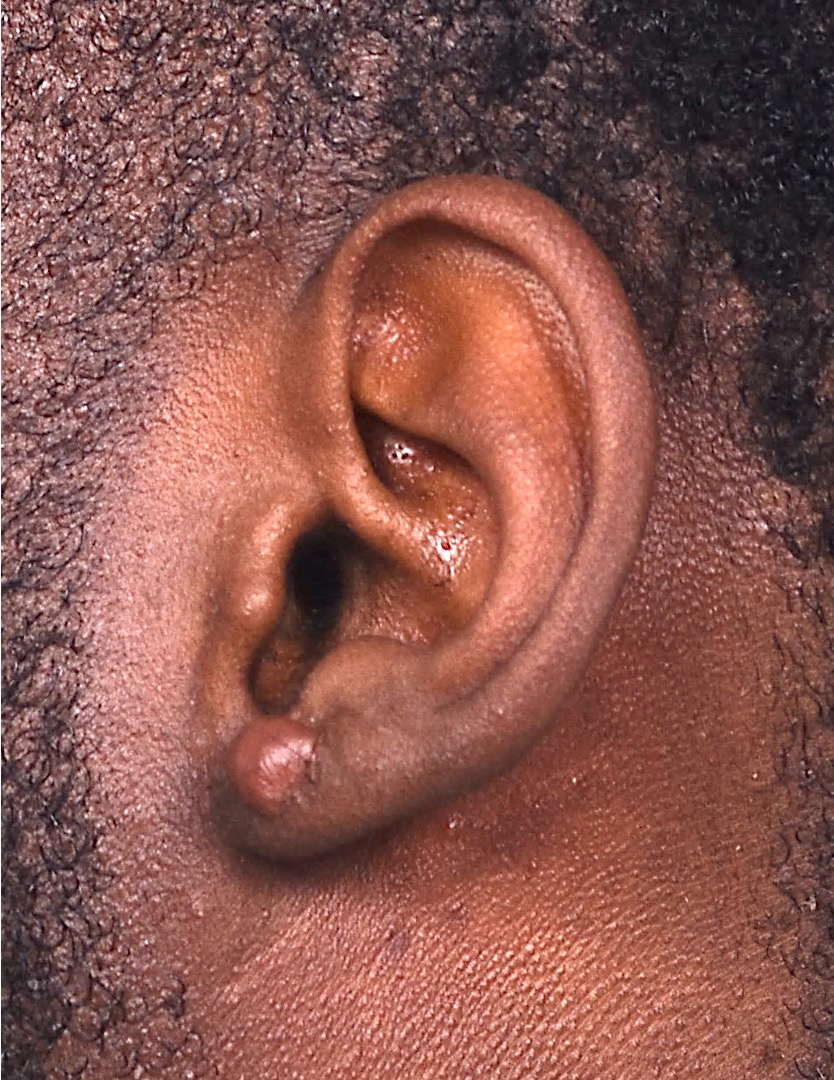
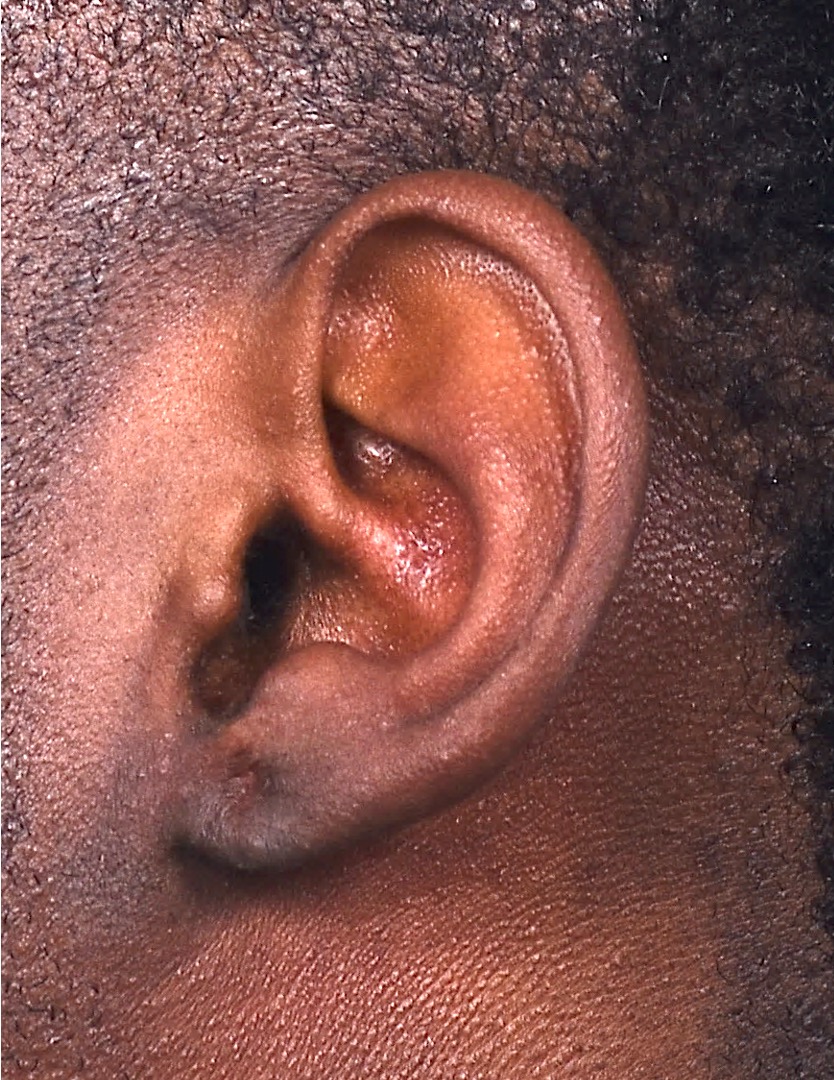
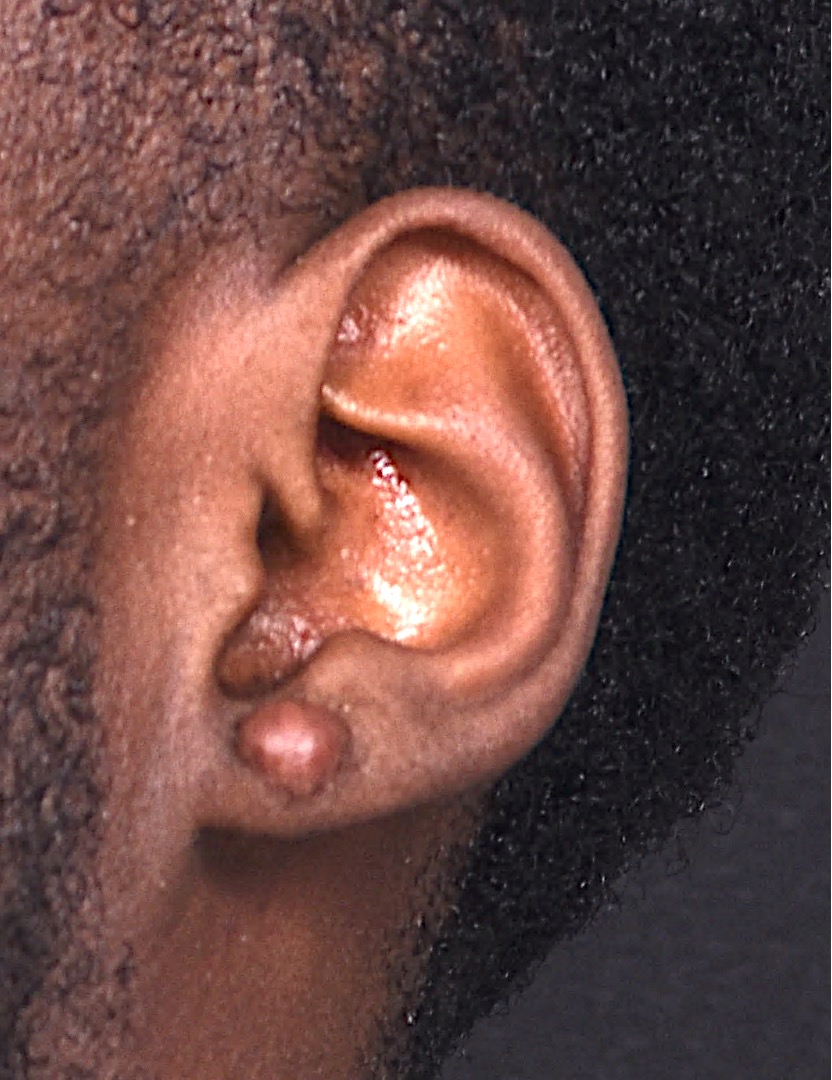
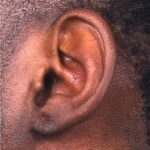
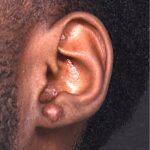
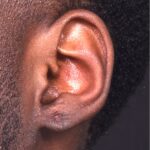
This 24-year-old gentleman developed a keloid (an excessively growing scar) on his left earlobe after an ear piercing. He had treatment in the form of surgical excision and cortisone (steroid) injections, but the keloid grew back. Our Facial Plastic surgeon Dr. Fishman removed the keloid via a minor surgical procedure, followed by a series of steroid injections to prevent the keloid from returning; the patient also received a series of low-dose radiation treatments to the earlobe to decrease the chance of another recurrence. The patient is shown 9 months after treatment. In addition to the above treatments, he has been using a pressure earring to prevent the keloid from coming back.
Keloids are scars that keep growing, for poorly understood reasons; there is likely a genetic component to forming keloids, which are seen more commonly in individuals of African-American and Asian backgrounds. Keloid scars can be itchy or painful during periods of growth, and have a high chance of growing back after treatment. We offer combination therapies, like surgery and steroid injections, in an attempt to prevent keloids from growing back. In cases of recurrent keloids, our Facial Plastic Surgeon commonly recomments patients undergo a short course of low-dose radiation therapy with one of our Radiation Oncology colleagues to decrease the chance of recurrence.