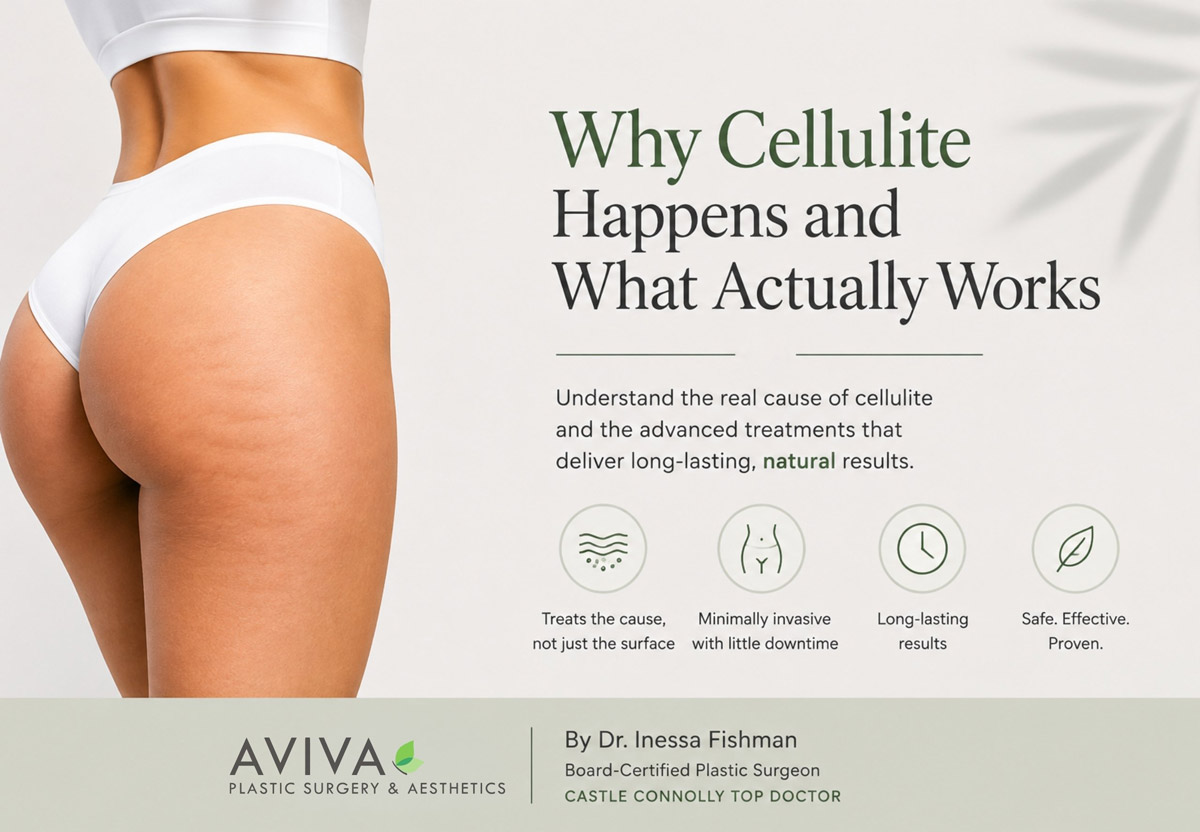
Cellulite is one of the most common aesthetic concerns among women. It is also one of the most misunderstood. You can eat well, exercise regularly, maintain a healthy weight, and still see dimpling across the thighs or buttocks.
That is because cellulite is not simply a matter of excess fat. Its appearance is tied to the way skin, fat, and fibrous connective bands interact beneath the surface.
At Aviva Plastic Surgery in Atlanta, we focus on treatments that match the anatomy causing the concern. For cellulite, that means looking beyond creams and temporary smoothing treatments and addressing the structures that create the dimples themselves.
Cellulite is normal. If it bothers you, the most useful question is not how to hide it, but what is actually causing it.
What Is Cellulite?
Cellulite is the dimpled or uneven texture that most often appears on the thighs, buttocks, and sometimes the hips. It is often described as an “orange peel” appearance.
Beneath the skin are fibrous connective bands called septa. These bands tether the skin to deeper tissues. Fat sits between them. When certain septa pull downward while the surrounding fat pushes upward, the surface of the skin can develop the familiar dimples associated with cellulite.
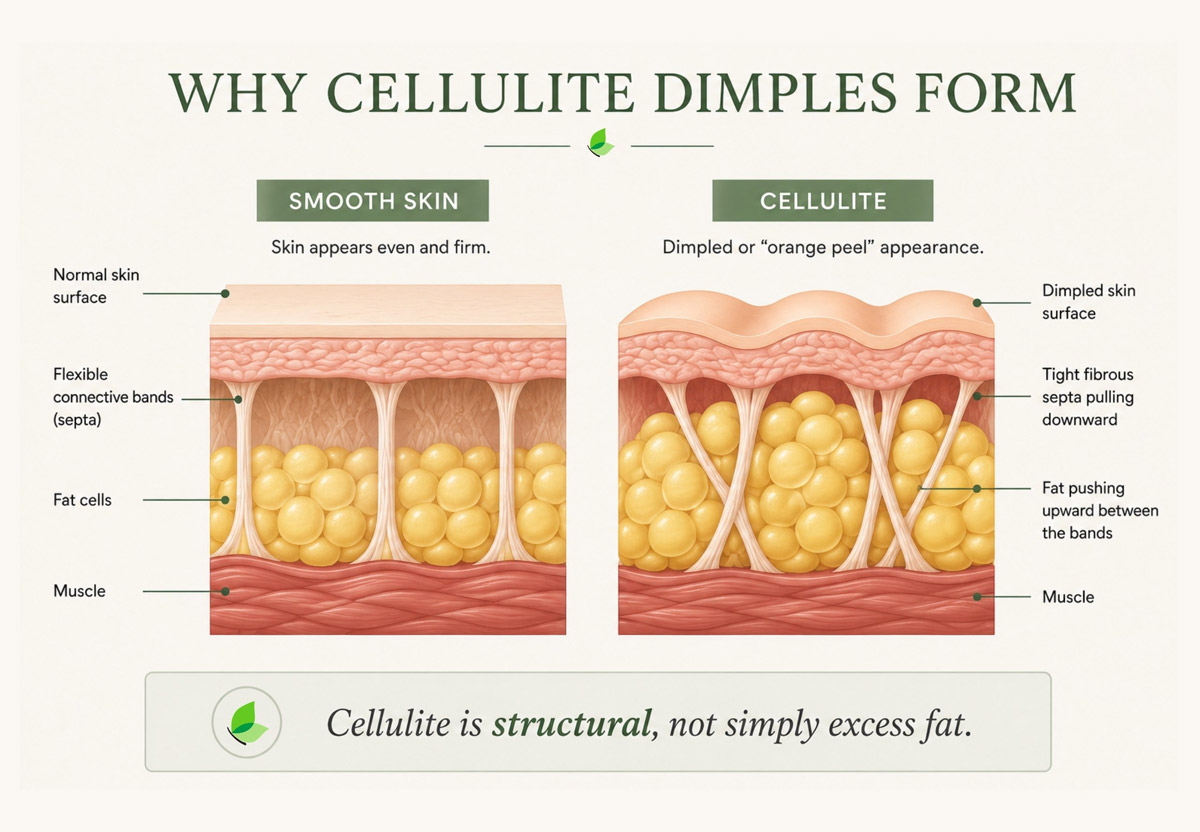
Cellulite forms when fibrous septa tether the skin downward while fat pushes upward between the bands, creating visible dimpling.
This helps explain why cellulite can appear in women of many different body types. Weight loss may reduce surrounding fat, but it does not necessarily release the connective bands creating a dimple. Exercise can improve muscle tone, but it cannot change those bands either.
Genetics, hormones, aging, collagen changes, and skin laxity can also affect how visible cellulite becomes over time.
One of the most important parts of a cellulite consultation is figuring out what you are actually seeing. A dimple caused by a tight fibrous band is different from loose skin, localized fat, or general skin texture. Those concerns can overlap, but they do not all respond to the same treatment.
Why Creams, Massage, and Exercise Do Not Fully Treat Cellulite
There is no shortage of products promising to smooth or erase cellulite. Some can temporarily make the skin look better, but the improvement is usually limited because the treatment is happening at the surface.
May hydrate or temporarily plump the skin, making dimples look less obvious for a short time.
Can temporarily reduce swelling or change how the skin looks, but do not release the underlying septa.
Improves strength, muscle tone, and overall body composition, but cannot cut or release fibrous bands.
May reduce fat volume, but cellulite can remain because the structural tethering is still present.
This does not make healthy habits unimportant. They support overall skin and body health. They simply address a different problem.
A More Direct Approach: Avéli® Cellulite Treatment
Avéli® is an FDA-cleared, minimally invasive treatment designed to address the fibrous bands responsible for visible cellulite dimples. Rather than trying to smooth the skin from above, the treatment works beneath the surface where the dimpling begins.
During treatment, the area is numbed with local anesthesia. A small handheld device is introduced through tiny skin openings. Dr. Fishman can identify the specific septa creating each visible dimple and then carefully release those bands.
Because the dimples are treated individually, Avéli is highly customized. The goal is not to make the skin look unnaturally perfect. It is to create a smoother, more even contour while keeping the result believable.
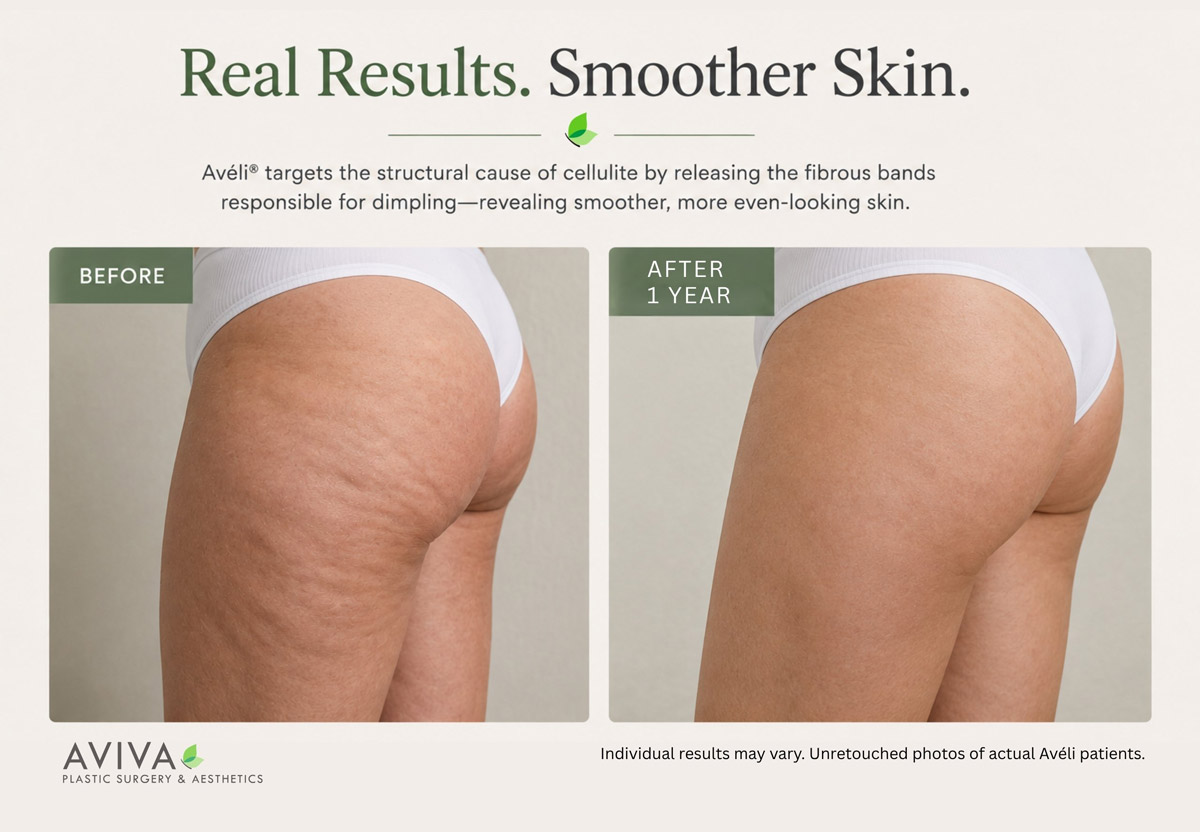
Avéli treats the bands creating the dimples, not just the appearance of the skin above them.
Who Is a Good Candidate for Avéli?
Avéli is designed for adult women with visible cellulite in areas such as the buttocks and thighs. You may be a good candidate if you:
During a consultation at our Atlanta practice, Dr. Fishman will look at the areas that concern you and determine whether cellulite, skin laxity, localized fat, or a combination of factors is contributing to the texture you see.
What Is Recovery Like After Avéli?
Recovery is usually manageable, although every patient heals at a different pace. Common early effects include bruising, mild soreness, swelling, and tenderness.
Bruising, swelling, and tenderness are common. Many patients feel comfortable returning to desk work within one to two days.
The treated areas continue to settle as swelling and bruising fade. Improvements become easier to appreciate as healing progresses.
More strenuous activity is resumed after your surgeon clears you based on how you are healing.
How Long Do Avéli Results Last?
Avéli is designed to release the specific connective bands causing existing cellulite dimples. Once those bands are released, they generally do not recreate the same dimples.
The natural aging process still continues, and new cellulite can develop in other areas over time. Even so, clinical studies have shown durable improvement after a single treatment, which is one reason Avéli has become an appealing option for patients who want more than temporary smoothing.
Can Cellulite Be Prevented?
There is no guaranteed way to prevent cellulite because genetics and hormones play such an important role. Healthy habits can still support the quality and appearance of the skin.
- Regular strength training
- Maintaining a stable weight
- Balanced nutrition
- Good hydration
- Sun protection to help preserve collagen
- Medical-grade skincare when appropriate
Think of these as supportive strategies. They can improve overall skin health, but they do not replace a treatment that directly addresses the septa responsible for true cellulite dimples.
Why Choose Aviva Plastic Surgery & Aesthetics for Cellulite Treatment in Atlanta?
Cellulite treatment is not simply about choosing a device. It starts with an accurate assessment of what is causing the texture you see.
At Aviva Plastic Surgery & Aesthetics, Dr. Inessa Fishman takes an anatomy-based approach to cosmetic treatment. If a visible irregularity is caused by fibrous septa, Avéli may be appropriate. If the concern is primarily loose skin, excess fat, or another issue, the treatment plan may look different.
Frequently Asked Questions
Cellulite is not a character flaw.
It is a structural issue with a structural solution.
Schedule a Cellulite Consultation in Atlanta
If cellulite on your thighs or buttocks has not changed much with exercise, weight loss, or topical products, the next step is figuring out what is creating the dimpling in the first place.
Schedule a consultation with Dr. Inessa Fishman at Aviva Plastic Surgery in Atlanta to find out whether Avéli is a good fit for your anatomy and goals.
Schedule a ConsultationThis post is for informational purposes only and does not constitute medical advice. Individual results vary. All surgical decisions are made on an individualized basis following a thorough in-person consultation with Dr. Fishman.
 English