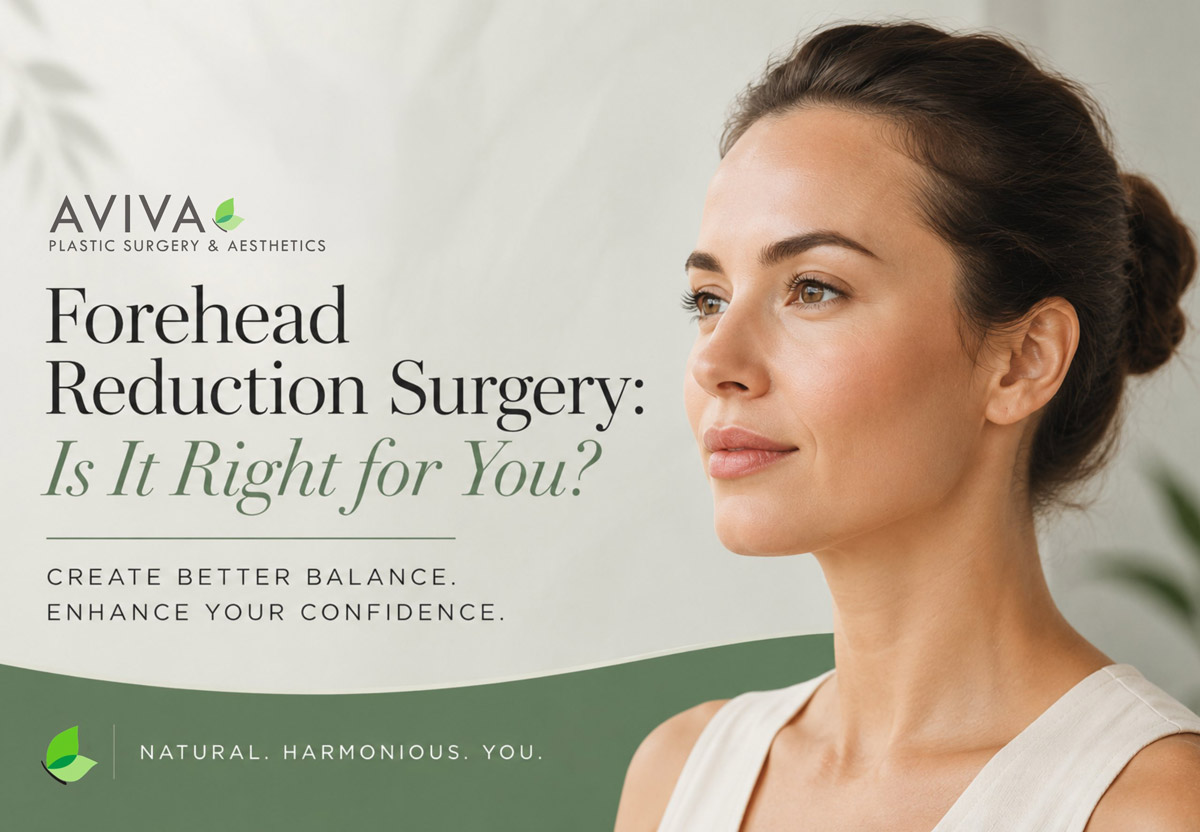
Forehead reduction surgery can bring a naturally high hairline forward to create better balance between the forehead and the rest of the face.
Forehead reduction surgery, also known as hairline lowering surgery, is designed to bring the hairline forward and reduce the visible height of the forehead. The goal is not to change your identity. It is to create better balance between the upper, middle, and lower thirds of the face.
For the right patient, even a relatively small change in hairline position can make the face feel more proportionate. But this is also a very specific procedure, and candidacy matters. Hair density, scalp flexibility, overall health, and expectations all play an important role in achieving a natural, long-lasting result.
The best candidate is not simply someone who wants a lower hairline. It is someone whose anatomy allows the hairline to be advanced safely and naturally.
What Does Forehead Reduction Surgery Actually Do?
During forehead reduction surgery, the scalp and hairline are carefully advanced forward. This shortens the visible height of the forehead and can create a more harmonious relationship between the forehead and the rest of the face.
On average, patients can expect the hairline to be lowered by approximately 1.5 to 2 centimeters. That may sound subtle, but facial proportion is often influenced by small measurements. A change of a centimeter or two can meaningfully alter how balanced the upper face appears.

Before and 1 week after forehead reduction surgery performed by Dr. Inessa Fishman. The forehead already appears shorter and more balanced; the early hairline incision will continue to heal, fade, and become better camouflaged by the surrounding scalp hair over the next several months.
The number of centimeters is only one part of the plan. I evaluate the entire upper face, the shape and density of the hairline, and how much the scalp can safely move. The goal is not to lower the hairline as far as possible. It is to create a result that looks proportionate and natural for that individual face.
The 5 Most Important Signs of a Good Candidate
Forehead reduction surgery is highly individualized. The strongest candidates typically meet the following criteria:
No Hair Loss or Progressive Alopecia
This is the most important factor. Because the procedure moves the existing hairline forward, the hairline itself needs to be healthy and stable.
Ideal candidates:
- Do not have thinning hair
- Do not have a history of progressive hair loss or alopecia
- Have a stable, dense, healthy hairline
Strong hair density helps support a natural-looking result over time. A patient with active or progressive hair loss may not be a good candidate because future thinning could change the appearance of the advanced hairline or make the incision more visible.
A Naturally High or Long Forehead
This procedure is best suited to patients whose forehead feels disproportionately tall compared with the rest of the face. Common concerns include:
- “My forehead looks too tall”
- “My hairline feels too high”
- “My face feels top-heavy or unbalanced”
The goal is facial proportion, not dramatic change. A successful result should still look unmistakably like you.
Good Scalp Flexibility
The scalp must be able to move forward safely. During a consultation, I evaluate:
- How flexible the scalp tissue is
- How much the hairline can safely be advanced
- What degree of improvement is realistic for your anatomy
Scalp mobility is one of the factors that determines how much forehead reduction can be achieved in a single procedure.
Good Overall Health
As with any surgical procedure, patients should be healthy enough to undergo surgery and heal properly. This generally includes:
- No uncontrolled medical conditions
- Being a non-smoker or willing to stop smoking before and after surgery as directed
- A good history of healing
Your medical history, medications, and individual risk factors are reviewed carefully before surgery is recommended.
Realistic Expectations
The most satisfied patients understand both what forehead reduction surgery can do and what it cannot do.
- It creates a subtle but meaningful improvement
- It does not drastically change facial structure
- It typically lowers the hairline approximately 1.5–2 cm
- It focuses on balance, not perfection
A thoughtful consultation should leave you with a clear understanding of the result your own anatomy can realistically support.
Who May Not Be a Good Candidate?
Not everyone with a high forehead should have forehead reduction surgery. In some cases, another approach may be safer or more appropriate.
Factors That May Affect Candidacy
- Active or progressive hair loss
- A thinning or unstable frontal hairline
- Limited scalp flexibility
- Medical conditions that may interfere with surgery or healing
- Expectations that exceed what the anatomy can safely achieve
For some patients, hair transplantation or another treatment strategy may be a better fit. The right recommendation depends on why the forehead appears long, the stability of the hairline, and the patient's long-term goals.
I am especially careful about hair loss history when evaluating this procedure. A high hairline and a receding hairline are not the same problem, and they should not automatically be treated the same way. The consultation is where we determine which concern is actually present.
What Does the Scar Look Like?
The incision is carefully placed along the hairline, where the forehead meets the hair-bearing scalp. The goal is to position and close the incision in a way that allows it to become increasingly discreet as healing progresses.
Over time:
- Hair may grow through or around the incision line
- The scar typically becomes less noticeable as it matures
- Following post-operative care instructions can play an important role in final scar appearance
Scar healing varies from person to person, which is why individual anatomy and healing history are part of the pre-operative evaluation.
Frequently Asked Questions
Natural, balanced, and harmonious results should still look like you.
The right procedure starts with the right patient selection.
Find Out If Forehead Reduction Surgery Is Right for You
If a naturally high hairline or long forehead affects how balanced your face feels, a personalized consultation can help you understand your options. We will evaluate your hairline, scalp flexibility, facial proportions, and goals together.
Schedule a ConsultationThis post is for informational purposes only and does not constitute medical advice. Individual results vary. All surgical decisions are made on an individualized basis following a thorough in-person consultation with Dr. Fishman.