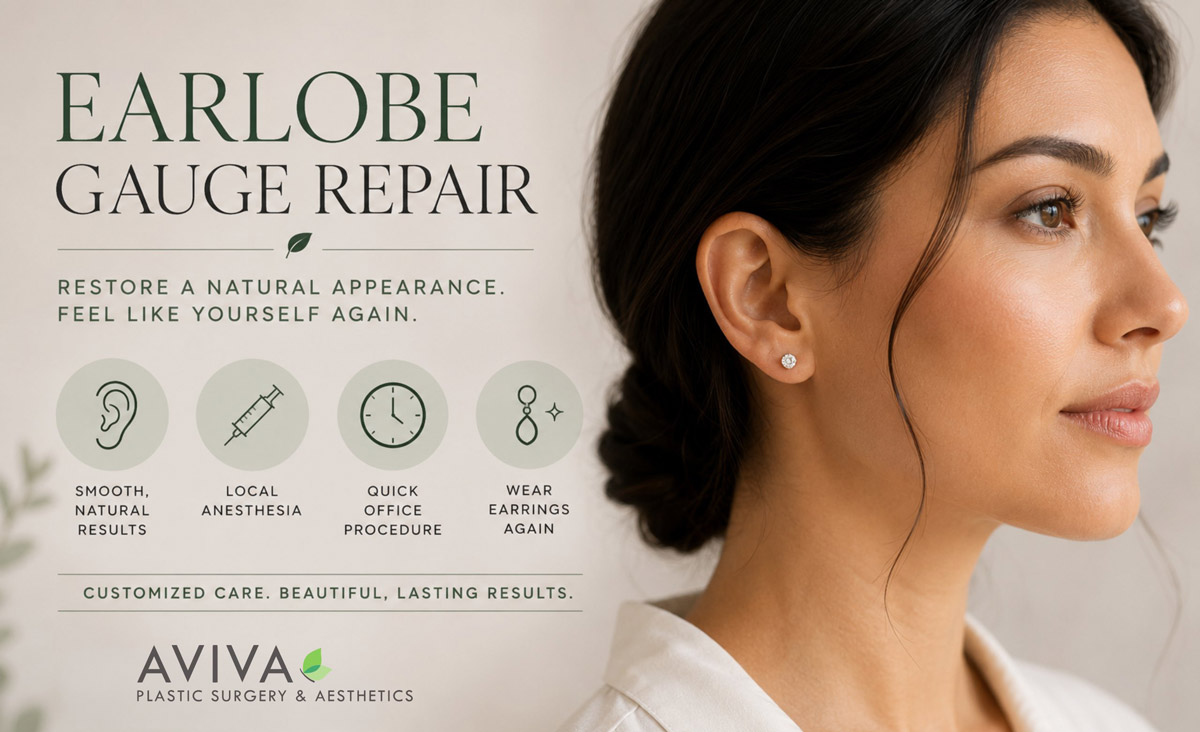
Smooth, natural results with local anesthesia, a quick office procedure that lets you wear earrings again.
Stretched earlobes, also known as gauged earlobes, have become increasingly common over the past several decades. While many people enjoy this look for a period of time, it's equally common to decide later that it no longer fits your style or lifestyle
Whether you're starting a new career, preparing for a special event, or simply want your ears to look the way they did before, earlobe gauge repair can help restore a natural appearance.
The goal is not simply to close the opening. It is to rebuild an earlobe that looks balanced, soft, and natural.
Will My Gauges Close on Their Own?
The answer depends on how large the gauges became and how long they were worn. Very small stretches may shrink after the jewelry is removed, especially when the tissue has not been stretched for very long. Larger gauges, however, often leave a permanent opening, thinning, or elongation of the earlobe.
Smaller openings
May partially shrink after jewelry is removed, although the final shape can be unpredictable.
Larger or long-standing gauges
More commonly leave a permanent opening or elongated lobe that requires surgical repair.
What Happens During Earlobe Gauge Repair?
Many patients are surprised to learn that the procedure is relatively quick and comfortable. Dr. Inessa Fishman performs earlobe gauge repair in our office using local anesthesia, meaning you're awake but your earlobe is completely numb.
During the procedure, the stretched tissue is carefully removed, and the remaining earlobe is meticulously reshaped to create a smooth, natural contour. Most appointments take less than an hour, depending on whether one or both ears are being repaired.
- Office-based: No hospital or operating room is typically required.
- Local anesthesia: The earlobe is fully numbed while you remain awake.
- Usually under one hour: Timing depends on the complexity and whether one or both ears are treated.
Every stretched earlobe is a little different. The repair has to account for the size of the opening, the amount of remaining tissue, and the natural shape of the opposite ear so the final result looks balanced rather than simply “closed.”
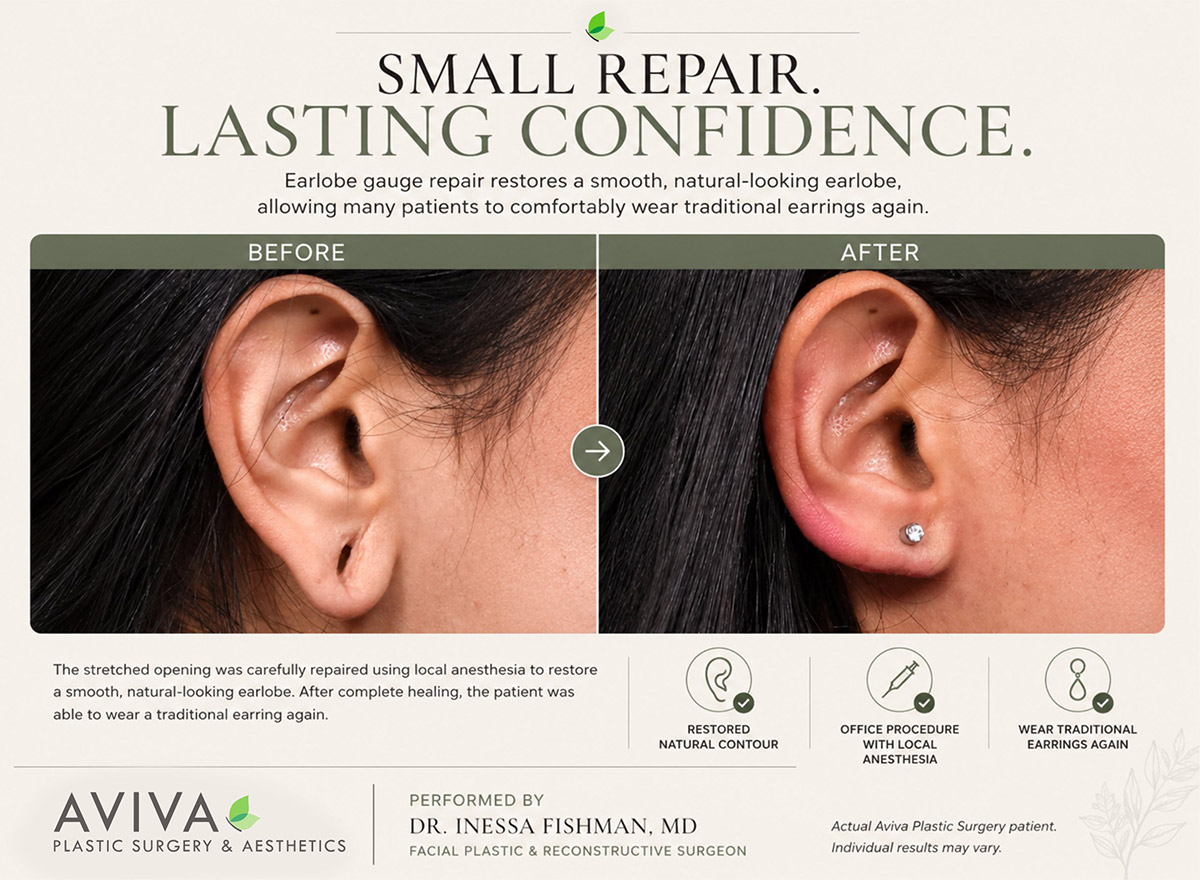
Earlobe gauge repair before and after showing restoration of a stretched earlobe by Dr. Inessa Fishman
Will There Be Scarring?
Another frequent question is whether there will be a scar. Anytime the skin is repaired, there will be a scar. However, because the incision is placed within the natural contour of the earlobe and closed with meticulous technique, the scar typically fades very well over time. As healing progresses, most patients find the scar becomes much less noticeable than the stretched opening they previously had.
What Is Recovery Like?
Recovery is usually straightforward. Mild soreness, swelling, or redness is normal during the first several days, but most patients feel comfortable returning to work, school, and other non-strenuous activities within a day or two.
Mild tenderness, swelling, or redness is expected. Most patients manage this with simple aftercare.
Most people return to work, school, and normal non-strenuous routines.
The incision continues to settle and the scar gradually softens and fades.
Professional re-piercing can be considered once Dr. Fishman confirms the earlobe is ready.
Occasionally, a repaired earlobe may heal with a small divot or subtle indentation. If that occurs, Dr. Fishman can perform a simple superficial cauterization treatment after healing is complete to gently smooth and refine the surface.
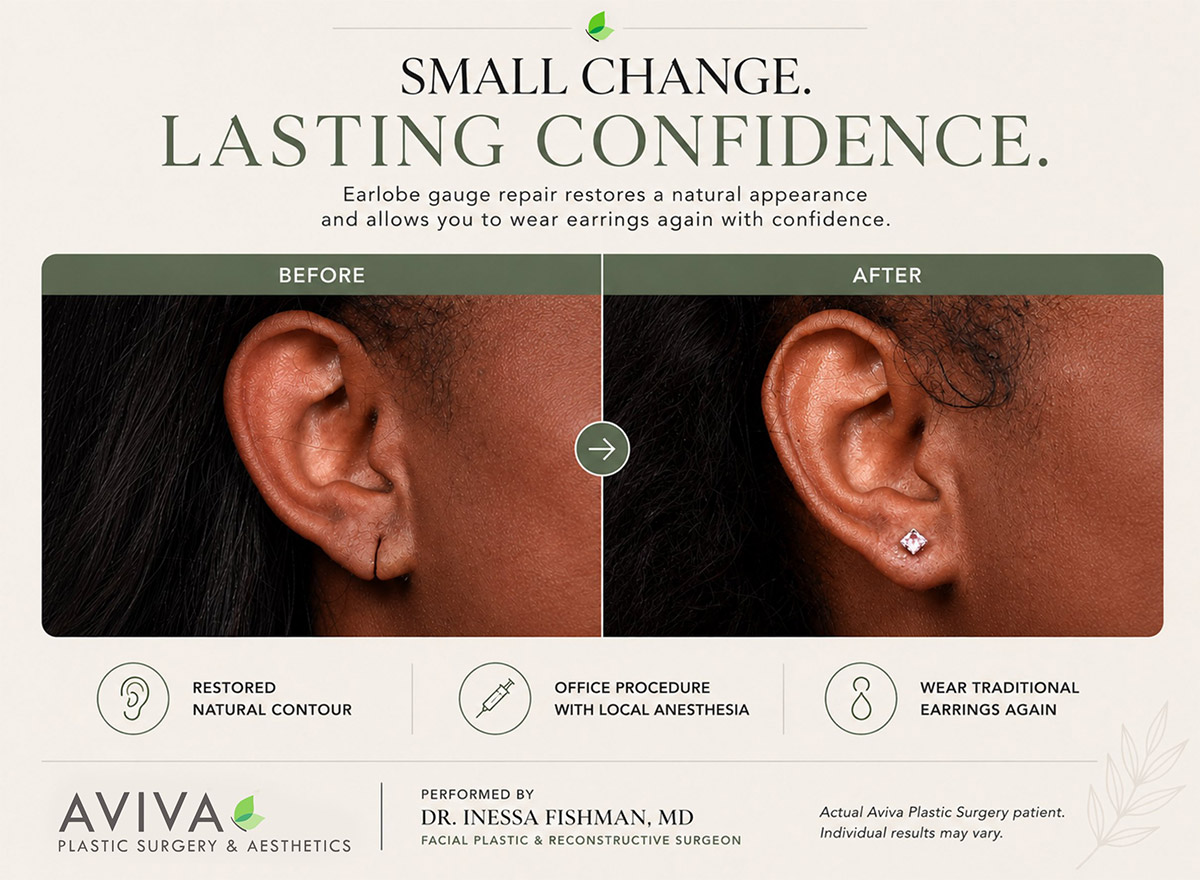
Before and after torn earlobe repair with re-piercing by Dr. Inessa Fishman.
Life After Earlobe Gauge Repair
One of the questions I hear most often is what happens after the earlobe has healed. Patients want to know whether they can wear earrings again, whether the repaired earlobe can be stretched in the future, and if there is an age limit for having the procedure. Fortunately, the answers are reassuring for most people considering repair.
Wearing Earrings Again
For many patients, being able to wear traditional earrings again is one of the most rewarding parts of the process. The repaired earlobe must be allowed to heal completely before it is pierced again.
Once healing is complete, Dr. Fishman can perform professional ear piercing so the new opening is placed in the ideal position for appearance and long-term durability.
Future Stretching
Technically, a repaired earlobe can be stretched again, but doing so places new stress on the repaired tissue and may increase the risk of thinning, stretching, or tearing. Because most patients pursue repair when they are ready for a more classic appearance, I generally recommend avoiding future gauging.
Age Is Rarely a Limiting Factor
Adults of many ages choose to close stretched earlobes. Whether you have worn gauges for two years or twenty years, repair can often create a natural-looking result as long as there is enough healthy tissue to work with.
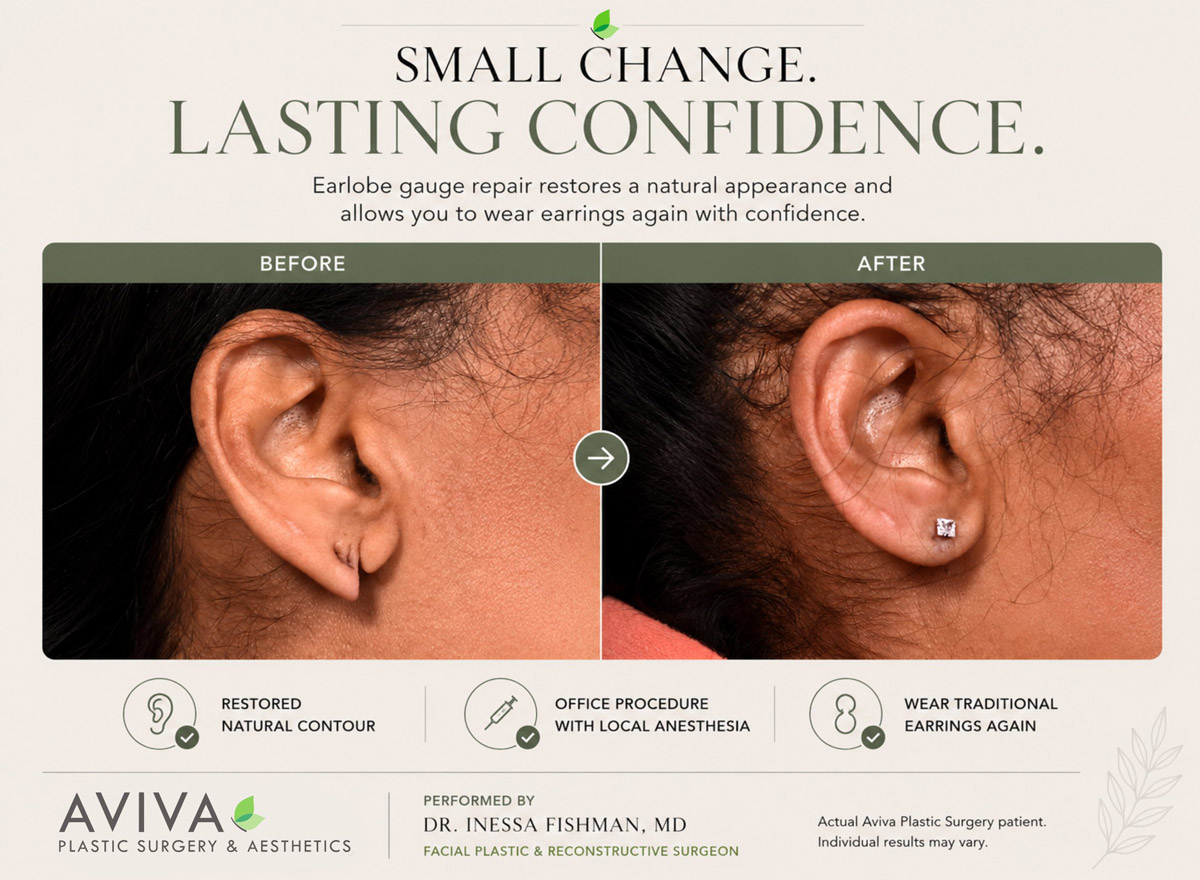
Before and after earlobe repair restoring a torn piercing by Dr. Inessa Fishman
See More Earlobe Repair Results
Explore additional before-and-after photos showing different gauge sizes, earlobe shapes, and repair approaches.
View the Complete GalleryFrequently Asked Questions
Beautiful, natural-looking results are possible whether you've had stretched ears for two years or twenty.
Schedule an Earlobe Repair Consultation in Atlanta
When you meet with Dr. Fishman, she’ll sit down with you to look at your earlobes, listen to what you hope to achieve, and walk you through what recovery looks like. From there, she’ll design a personalized plan tailored specifically to your unique ears.
Schedule a ConsultationThis post is for informational purposes only and does not constitute medical advice. Individual results vary. All surgical decisions are made on an individualized basis following a thorough in-person consultation with Dr. Fishman.
 English